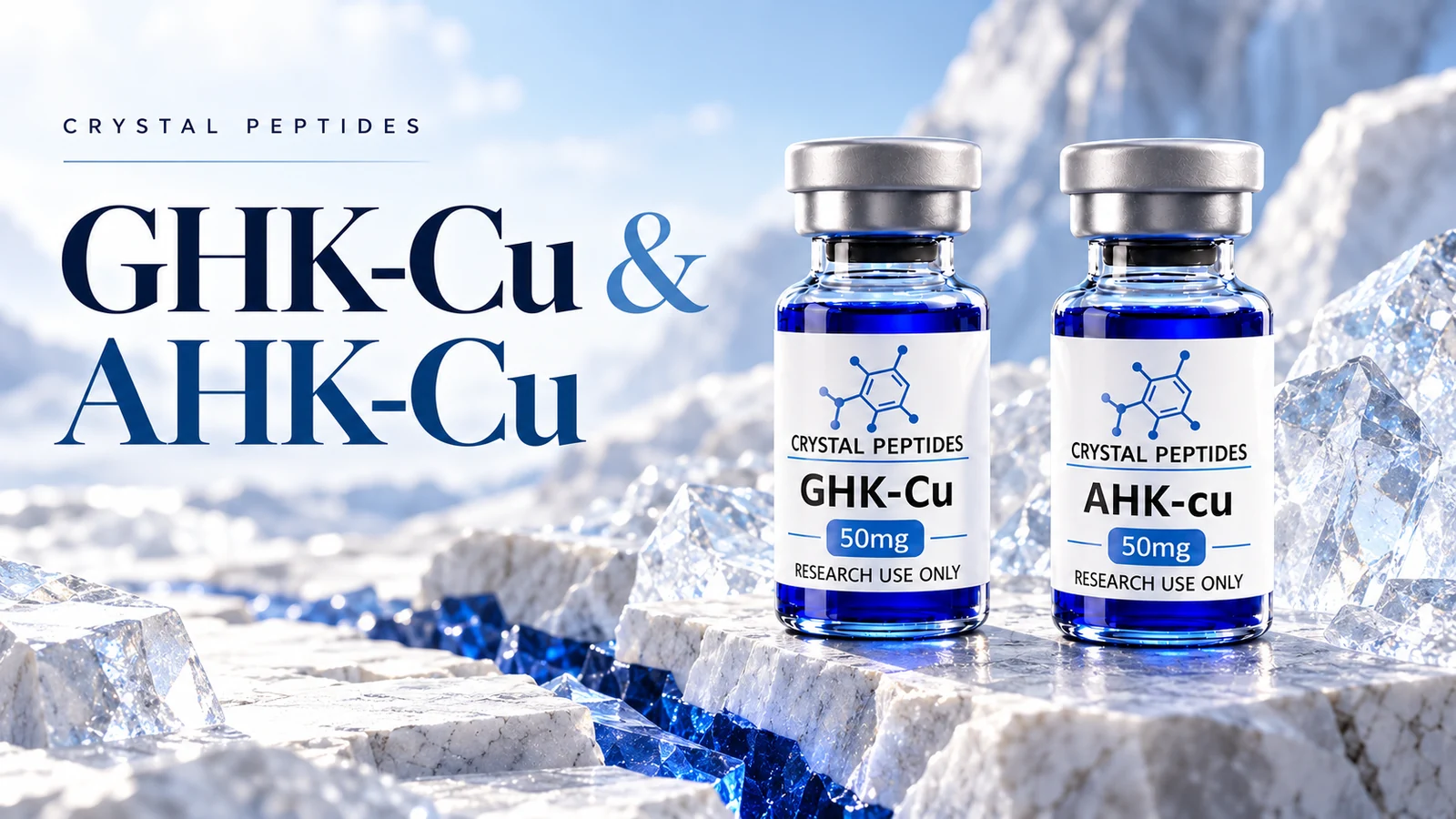
GHK-Cu in AHK-Cu: kaj se spremeni, ko se zamenja ena aminokislina?
GHK-Cu in AHK-Cu se razlikujeta v eni aminokislini, vendar njunih imen ne smemo uporabljati kot sopomenki. GHK vsebuje glicin, histidin in lizin; AHK vsebuje alanin, histidin in lizin. Oznaka Cu se nanaša na kompleks z bakrom. Ta majhna strukturna razlika je koristno izhodišče za primerjavo, vendar sama po sebi ne omogoča napovedi, katera spojina bo povzročila določen biološki izid.
Razlikujeta se tudi njuni raziskovalni zgodovini. GHK-Cu so preučevali v modelih vezivnega tkiva in v okviru kemije vezave bakra. O AHK-Cu obstaja eksperimentalna literatura, ki vključuje lasne mešičke in celice dermalne papile. Razumevanje metod, na katerih temeljijo ta opažanja, pove več kot poenostavitev primerjave na »kožo proti lasem«.
Ena aminokislina spremeni molekulo, ne le njenega imena
Glicin in alanin sta majhni aminokislini. Glicin ima kot stransko verigo vodik, alanin pa metilno skupino. Zamenjava ene z drugo spremeni prvi aminokislinski ostanek peptida, medtem ko histidin in lizin ostaneta na istih mestih v zaporedju.
Ta razlika potrjuje, da sta GHK in AHK različni molekuli. Ne dokazuje pa, da imata enake lastnosti vezave bakra, porazdelitev v tkivih ali biološko potentnost. To so eksperimentalna vprašanja, ne pa sklepi, ki bi jih lahko izpeljali iz kratic.
Bakrov peptid je tudi več kot ime peptida, ki mu sledi mineral. Raziskovalci preučujejo, kako se kovina koordinacijsko veže na peptid in kako okoliške razmere vplivajo na kompleks. Termodinamski poskusi z GHK so preučevali močno vezavo bakra v opredeljenih pogojih ter pomen upoštevanja konkurenčnih ligandov in eksperimentalnega pufra. Raziskava je preučevala tudi DAHK, zaporedje štirih aminokislin — ne AHK iz treh aminokislin, o katerem govorimo tukaj. Zato ne more služiti kot neposredna primerjava GHK in AHK. Trapaidze in sodelavci, 2012.
Kaj so raziskave GHK-Cu dejansko merile
Ena zgodnjih raziskav GHK-Cu je preučevala sintezo kolagena v kulturah fibroblastov. Fibroblasti so celice, ki sodelujejo pri nastajanju sestavin vezivnega tkiva. Raziskovalci so v svojih eksperimentalnih pogojih poročali o povečani sintezi kolagena brez ustreznega povečanja števila celic. To razlikovanje je pomagalo ločiti izmerjeni biokemični odziv od same proliferacije. Maquart in sodelavci, 1988.
Nastajanje kolagena in razmnoževanje celic nista zamenljiva izida. Kultura z več celicami lahko proizvede večjo skupno količino snovi, ne da bi posamezne celice spremenile svojo aktivnost. Merjenje obojega pomaga razložiti, kaj se je spremenilo. Kljub temu gojitvena posoda ne poustvari celotne kožne pregrade, imunskega okolja ali procesa celjenja, ta poskus pa ni ugotovil učinkovitosti končne formulacije za nego kože pri ljudeh.
Poznejši poskus je preučeval GHK-Cu z zaporednimi injekcijami v podkožne mrežaste komore za preučevanje ran pri podganah. Raziskovalci so merili kopičenje sestavin zunajceličnega matriksa v tem eksperimentalnem okolju rane. Model s komoro jim je omogočil preučevanje lokalnih tkivnih odzivov pri živi živali namesto v izoliranih celicah. Maquart in sodelavci, 1993.
Kopičenje je pomembno razlikovanje: prisotna količina odraža ravnovesje med nastajanjem, razgradnjo in zadrževanjem. To ni enaka meritev kot sinteza kolagena v celični kulturi. Ugotovitve pri podganah podpirajo nadaljnje raziskovanje lokalnih odzivov matriksa, vendar ne dokazujejo zmanjšanja gub pri ljudeh, sistemskega pomlajevanja ali učinkovitosti pri drugačnem načinu vnosa.
Zakaj je AHK-Cu zanimiv za raziskave las
Pogosto citirana raziskava AHK-Cu je preučevala izolirane človeške lasne mešičke in gojene celice dermalne papile. Celice dermalne papile sodelujejo v signalnem okolju mešička. Raziskovalci so opazili podaljševanje mešičkov v organski kulturi in povečano proliferacijo gojenih celic. Preučevali so tudi označevalce, povezane s preživetjem celic; vsi rezultati niso dosegli statistične značilnosti. Pyo in sodelavci, 2007.
Ti poskusi obravnavajo sorodna, a različna vprašanja. Organska kultura mešičkov ohrani več tkivne organizacije kot kultura ene vrste celic. Celični poskusi pomagajo preučevati morebitne dejavnike, ki prispevajo k odzivu, vendar povečana proliferacija celic dermalne papile sama po sebi ni dokaz povečanega nastajanja las.
Tkivo človeškega izvora je dragoceno, vendar izolirani mešiček ostaja eksperimentalni model. Raziskava ni merila vidne poraščenosti lasišča, trajnosti učinka po obravnavi ali učinkovitosti pri različnih vzrokih izpadanja las. Prav tako ni ugotovila, da AHK-Cu v klinični primerjavi prekaša GHK-Cu.
Zakaj formulacija onemogoča preprosto razvrščanje
Raziskava transporta GHK-Cu je uporabila laboratorijski membranski sistem za preučevanje prehajanja skozi model zunanje kožne pregrade. Njene ugotovitve so se nanašale na transport v preizkušenih kemijskih pogojih, ne pa na klinično učinkovitost vsake formulacije, ki vsebuje GHK-Cu. Raziskava transporta skozi modelno membrano.
Molekularna aktivnost, prehajanje skozi modelno membrano in viden tkivni izid so ločena vprašanja. Celični poskus lahko celice neposredno izpostavi snovi in tako obide pregrade, na katere bi naletel končni izdelek. Po drugi strani zaznano prehajanje skozi membrano ne dokazuje, da do ustreznih celic v aktivni obliki prispe zadostna količina.
Primerjava dokazov brez pretiranega poenostavljanja
| Značilnost | GHK-Cu | AHK-Cu |
|---|---|---|
| Peptidno zaporedje | Gly–His–Lys | Ala–His–Lys |
| Tukaj obravnavani primeri raziskav | Vezava bakra, sinteza kolagena v fibroblastih in komore za preučevanje ran pri podganah | Izolirani človeški mešički in kulture celic dermalne papile |
| Izmerjeni odzivi | Vezavne lastnosti, sinteza kolagena in kopičenje sestavin matriksa | Podaljševanje mešičkov, proliferacija celic in označevalci, povezani s preživetjem |
| Neodgovorjeno klinično vprašanje | Ali določena formulacija izboljša opredeljeni izid na človeški koži | Ali določena formulacija povzroči trajno, vidno ponovno rast las |
Poimenovanje GHK-Cu kot peptida za kožo in AHK-Cu kot peptida za lase lahko bralcu pomaga pri orientaciji, vendar to ni stroga biološka ločnica ali potrjena razvrstitev. Raziskave uporabljajo različne eksperimentalne sisteme in izide; ne dokazujejo, da bi morala ena spojina nadomestiti drugo ali da je njuna kombinacija boljša.
Koristen sklep je ožji: zamenjava enega aminokislinskega ostanka ustvari drugačno molekulo, razpoložljive raziskave pa zagotavljajo različne vrste dokazov. Pri razlagi katere koli od obeh spojin obravnavajte njeno identiteto, formulacijo, eksperimentalni model in izmerjeni izid skupaj. Podobni imeni ne moreta nadomestiti primerjave v enakih pogojih.
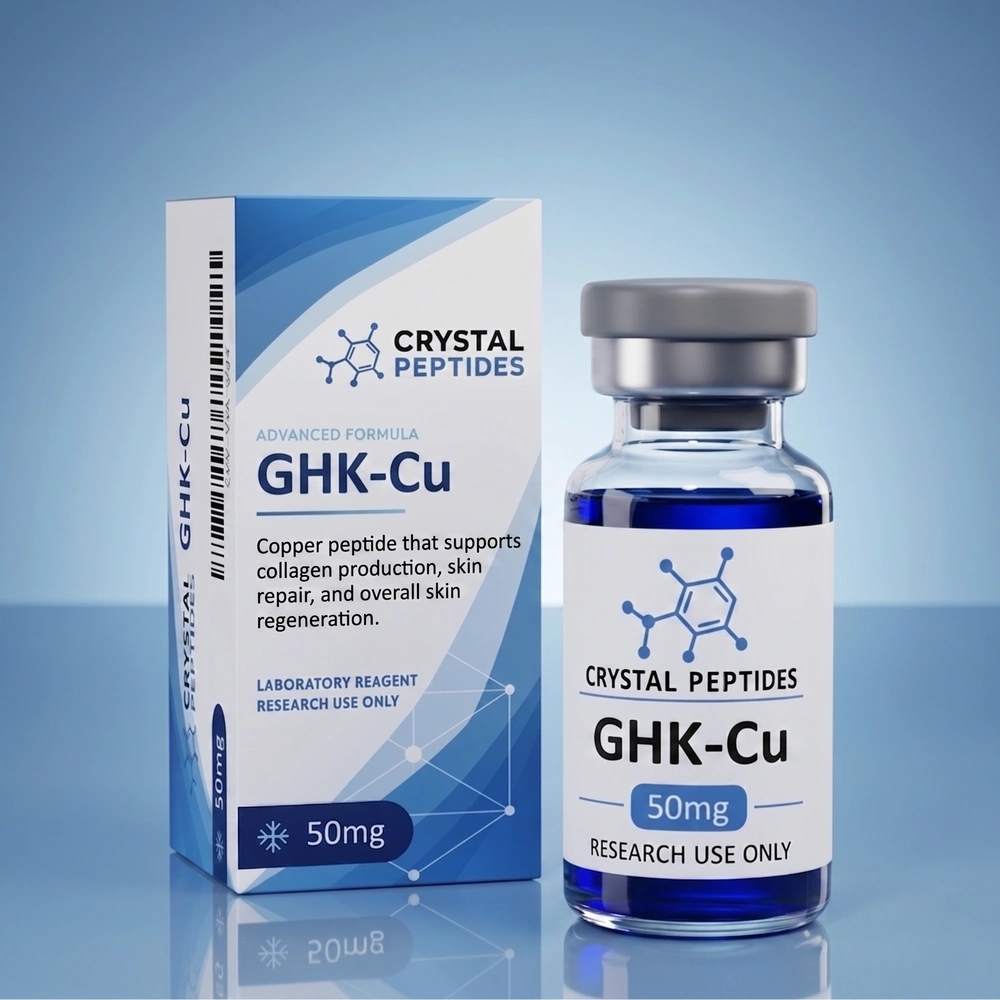
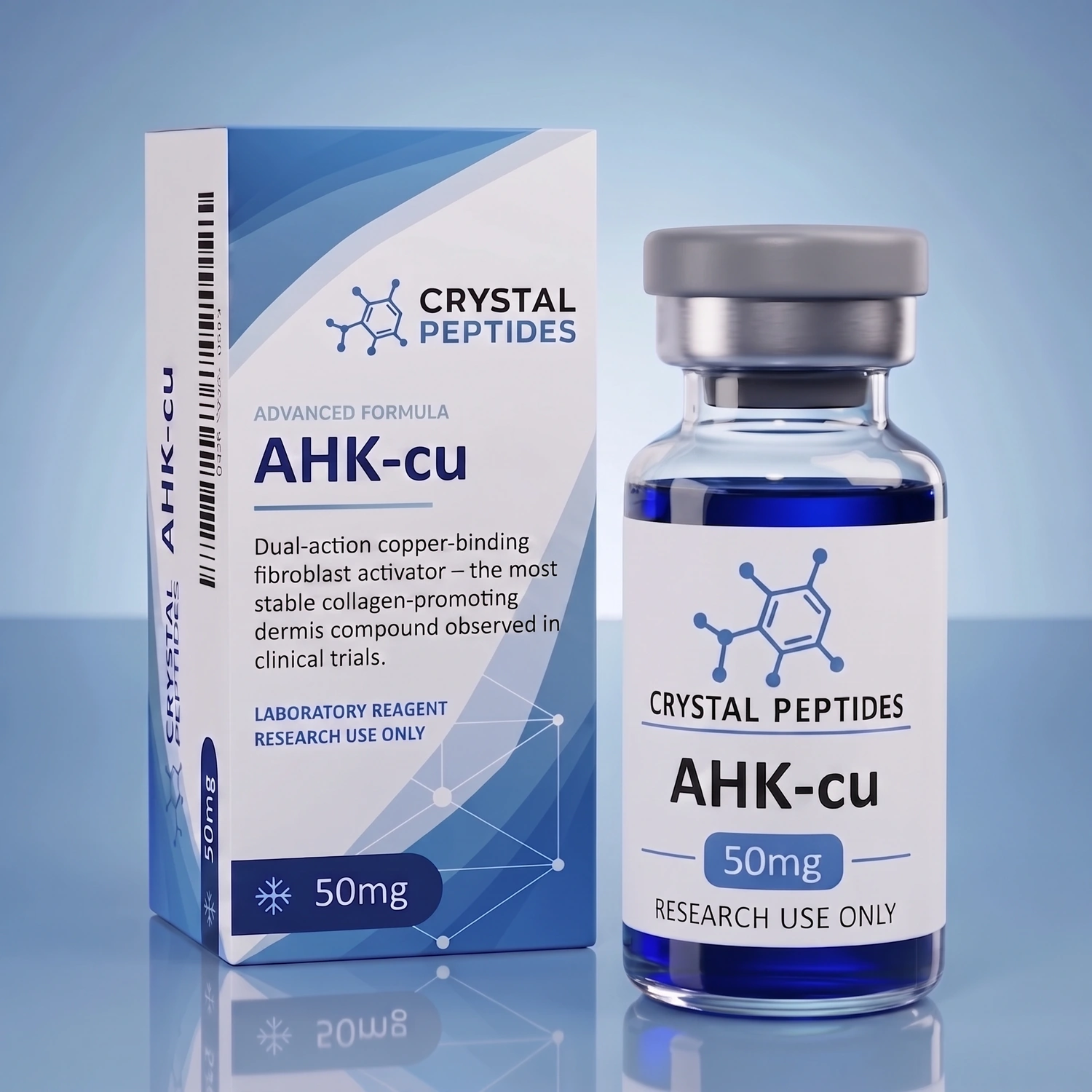
Raziščite izdelke iz tega članka
Vsi izdelki dosegajo več kot 99 % čistost, izdelani so v certificiranem laboratoriju EU in opremljeni z laboratorijskim poročilom.
Izjava o omejitvi odgovornosti za raziskovalne vsebine
Ta članek je samo v informativne in raziskovalne namene. Vsebina ni mišljena kot zdravniški nasvet, diagnoza ali priporočilo za zdravljenje.